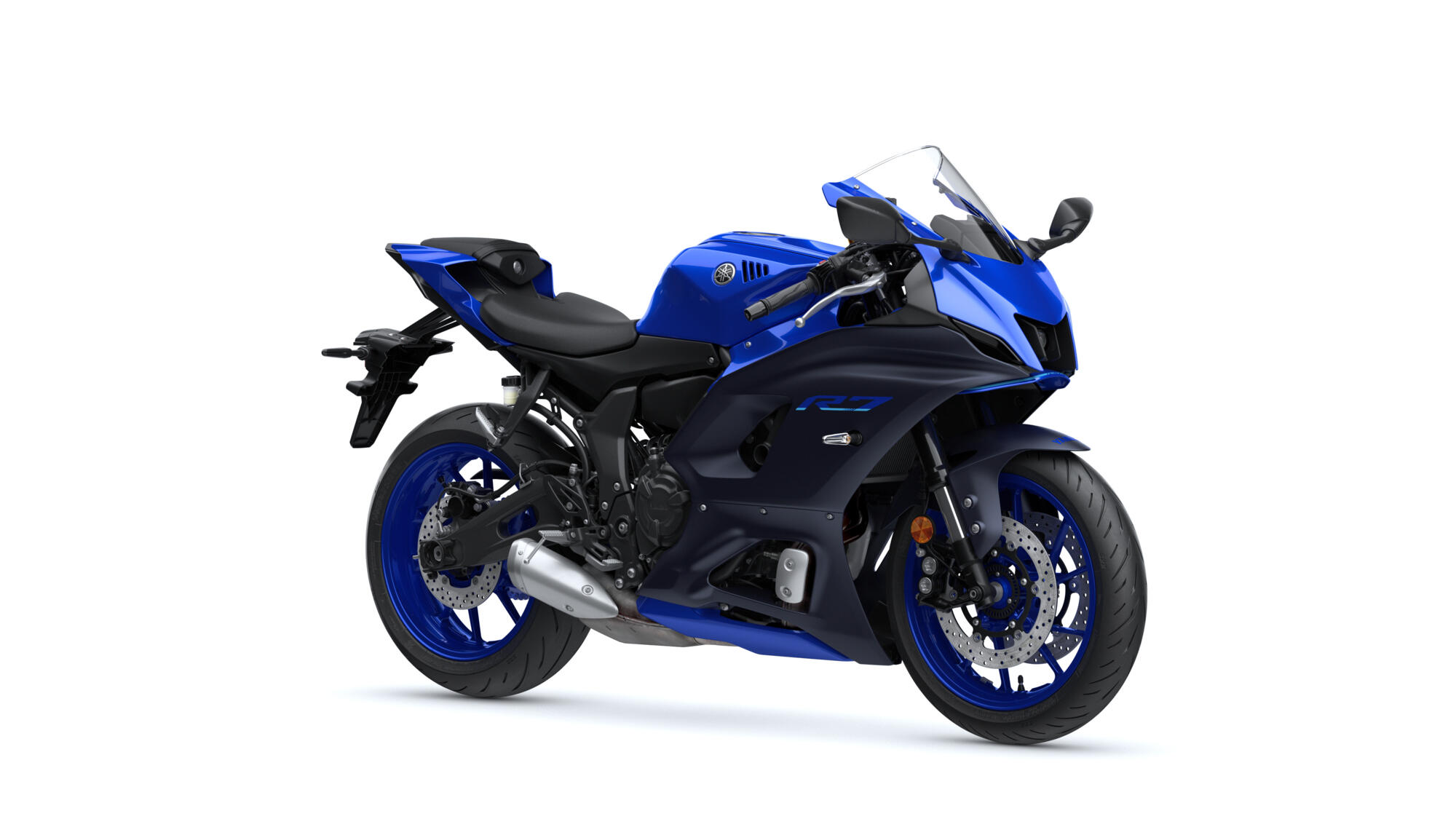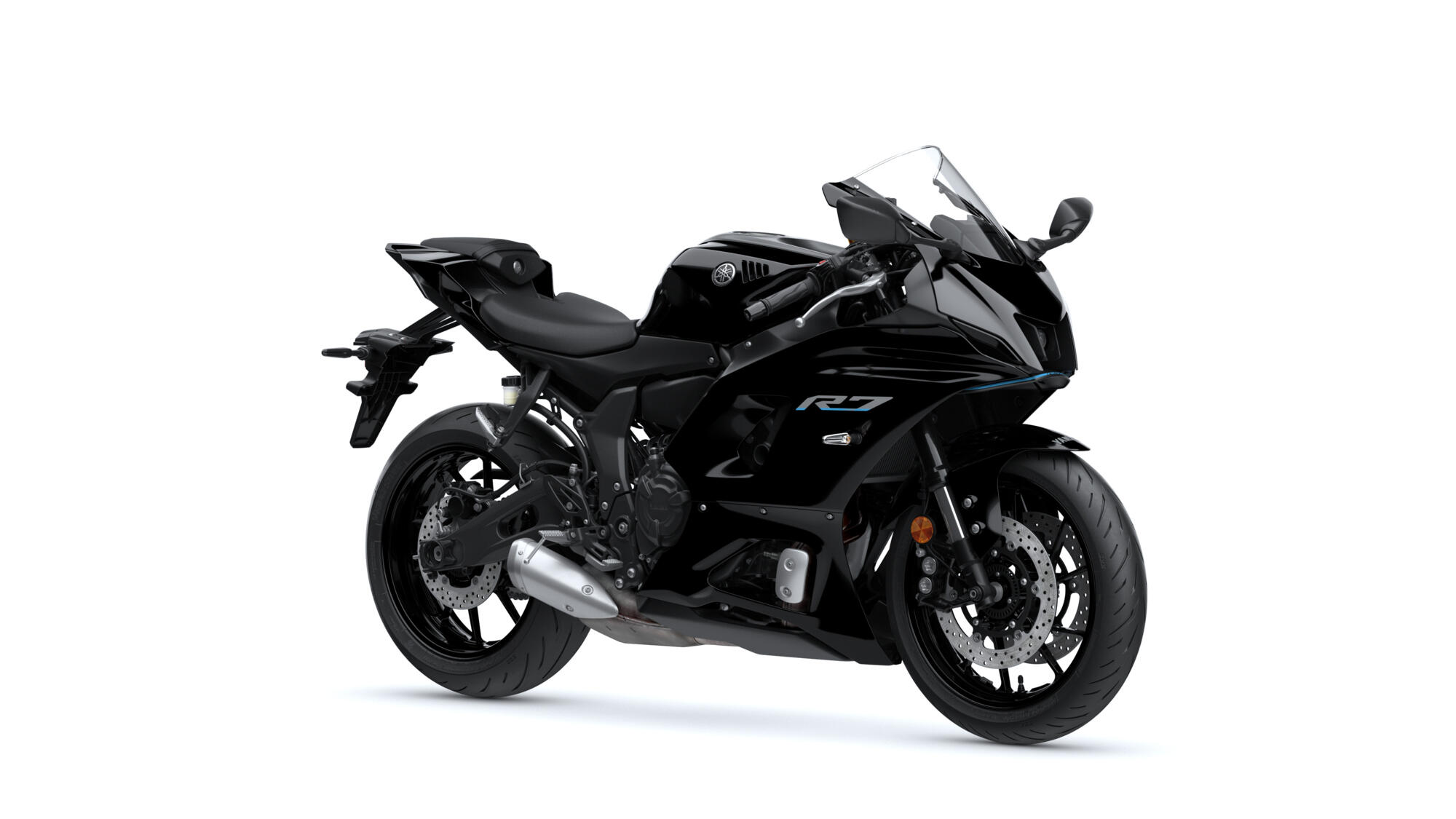
Yamaha R7
The 2026 Yamaha R7 represents the biggest step forward yet for Yamaha’s middleweight Supersport. Built around the brand’s well-established 689cc CP2 parallel-twin engine, the new R7 keeps the engaging torque-rich performance that made earlier versions so popular, while adding a much more advanced electronics package and a refined chassis to create a sharper, more capable machine. Yamaha describes it as a Supersport for the real world, blending advanced electronics, refined agility and striking R-Series design into a package that remains approachable, exciting and usable every day.
At the heart of the bike is Yamaha’s liquid-cooled 689cc DOHC 4-valve twin-cylinder engine, producing 54.0 kW (73.4 PS) at 8,750 rpm and 68 Nm at 6,500 rpm. The engine is paired with a 6-speed transmission, fuel injection and chain final drive, and Yamaha also lists an A2 35 kW restricted version. The CP2 motor remains one of the R7’s strongest selling points, offering strong usable mid-range torque, lively acceleration and the distinctive character riders expect from Yamaha’s crossplane-inspired twin-cylinder platform.
For 2026, the biggest technical change is the arrival of R1-derived electronics. Yamaha states that the new R7 now features a 6-axis IMU, YCC-T electronic throttle and Yamaha Ride Control (YRC), bringing genuine supersport-style rider support to the middleweight category. The bike comes with three preset ride modes — Sport, Street and Rain — and also allows two fully customisable setups through the MyRide app, giving riders more control over power delivery and electronic intervention depending on road, weather or track conditions.
The rider-aid package is a major part of the 2026 model’s appeal. Yamaha confirms lean-sensitive Traction Control, Slide Control, Lift Control, Brake Control, power modes, Launch Control, and a third-generation Quick Shift System (QSS). Together, these systems help the R7 feel more precise, more confidence-inspiring and more adaptable, whether it is being ridden on the road or pushed harder on circuit. This is a substantial update over the earlier R7 and one of the clearest signs that Yamaha has moved the model further up the technological ladder for 2026.
Chassis and handling have also been revised in a meaningful way. Yamaha says the frame has been updated for greater stiffness while maintaining weight, and the bike now uses fully adjustable 41 mm upside-down front forks with lightweight aluminium piston rods to improve response and precision. The R7 also gains lightweight SpinForged wheels and Bridgestone Battlax Hypersport S23 tyres, helping deliver quicker steering, improved agility and stronger cornering feel. Yamaha’s official material presents the 2026 R7 as a more agile and more composed Supersport, with improved confidence through every curve.
The riding position has also been refined. Yamaha states that the updated ergonomics make the bike easier to live with every day, with a repositioned handlebar, reshaped fuel tank and a lower 830 mm seat height. Combined with the R1-style footpeg arrangement, this gives the bike a sportier but more manageable feel, making it a better all-rounder for commuting, weekend riding and occasional track use. Aerodynamics and styling have also been sharpened, with Yamaha highlighting next-generation R-Series design and improved airflow management.
Inside the cockpit, the 2026 R7 gets a 5-inch TFT colour display with full connectivity, while Yamaha also highlights Y-TRAC Rev functionality that is intended to make the rider feel closer to a professional track experience. This more modern interface is part of the broader 2026 upgrade that pushes the R7 beyond being just a simple, torque-rich sportbike and turns it into a much more complete electronics-equipped Supersport.
Overall, the 2026 Yamaha R7 is a substantial evolution rather than a simple facelift. It keeps the accessible character and proven CP2 engine that made the original model successful, but adds more sophisticated control systems, improved suspension, sharper chassis behaviour and a more premium rider interface. For riders who want a modern Yamaha Supersport that offers real performance without stepping into a more extreme class, the new R7 is one of the strongest and most technically improved options in the segment.
Key Technical Updates for 2026
- R1-derived 6-axis IMU for more advanced motion sensing and rider-aid management.
- YCC-T electronic throttle added for more precise throttle control and electronic integration.
- Yamaha Ride Control (YRC) with Sport, Street and Rain modes, plus two custom modes via MyRide.
- Lean-sensitive rider aids including Traction Control, Slide Control and Brake Control.
- Launch Control and Lift Control added.
- Third-generation Quick Shift System (QSS).
- Revised, stiffer chassis for sharper and more confident handling.
- Fully adjustable 41 mm USD forks with lightweight aluminium piston rods.
- Lightweight SpinForged wheels and Bridgestone Battlax Hypersport S23 tyres.
- Refined ergonomics with a lower 830 mm seat height.
- 5-inch TFT colour display with full connectivity.
- Y-TRAC Rev track-oriented functionality.
Technical Specifications
Engine
Engine type: 2-cylinder, liquid-cooled, DOHC, 4-valves, 4-stroke
Displacement: 689 cc
Bore x stroke: 80.0 mm x 68.6 mm
Compression ratio: 11.5:1
Maximum power: 54.0 kW (73.4 PS) @ 8,750 rpm
Maximum torque: 68 Nm @ 6,500 rpm
A2 version: 35.0 kW (47.6 PS) @ 4,500 rpm
Fuel system: Fuel Injection
Lubrication: Wet sump
Clutch: Wet, multiple disc
Ignition: Transistor / TCI
Starter: Electric
Transmission: 6-speed
Final drive: Chain
Chassis
Frame: Brückenrohrrahmen / diamond-style frame
Front suspension: Upside-down fork, 41 mm
Front travel: 120 mm
Rear suspension: Link-type rear shock / swingarm
Rear travel: 121 mm
Front brake: Hydraulic dual disc, 298 mm
Rear brake: Hydraulic single disc, 245 mm
Front tyre: 120/70ZR17M/C (58W), tubeless
Rear tyre: 180/55ZR17M/C (73W), tubeless
Caster angle: 24º
Trail: 91 mm
Dimensions
Overall length: 2,070 mm
Overall width: 725 mm
Overall height: 1,160 mm
Seat height: 830 mm
Wheelbase: 1,395 mm
Ground clearance: 135 mm
Wet weight: 189 kg
Fuel tank capacity: 14.0 L
Oil capacity: 3.0 L
Economy
Fuel consumption: 4.1 L/100 km
CO2 emissions: 97 g/km
Why choose the Yamaha R7
The 2026 Yamaha R7 gives riders the proven character of Yamaha’s CP2 engine, but now with a far more advanced electronics package, sharper chassis tuning and a more modern cockpit. It is a genuine step forward for the model and a strong option for riders who want a middleweight Supersport that feels exciting, precise and modern without becoming intimidating or overly specialised.
| Brand | Yamaha |
|---|---|
| Licence Type | A |
| Model | R7 |
| Colours Available | Black, Blue, White |